
Fall in Minnesota is beautiful. The changing leaves create colorful landscapes, cooler temperatures make outdoor activities more enjoyable, and homeowners begin preparing their properties for the colder months ahead.
Unfortunately, those beautiful leaves eventually fall, and many end up somewhere they shouldn’t: inside your gutters.
For homeowners surrounded by mature maples, oaks, birches, and pine trees, keeping gutters clear can become a frustrating seasonal chore. Leaves, pine needles, twigs, and other debris accumulate quickly, especially during windy autumn weather.
That’s where gutter guards in Minnesota can make a difference.
Gutter guards are designed to reduce the amount of debris entering your gutters while allowing rainwater to drain through the system. Although they don’t eliminate maintenance entirely, they can make seasonal gutter care more manageable.
If you’re wondering whether gutter guards are worth considering before winter, understanding how they work, what they protect against, and their limitations can help you make an informed decision.
Minnesota homeowners face a unique combination of seasonal challenges.
During September and October, trees shed leaves while rainstorms and windy weather move debris across rooftops. By late fall, temperatures begin dipping below freezing, sometimes before every leaf has fallen.
That creates an unfortunate combination for unprotected gutters.
Leaves collect inside the gutter channels, become wet, and form compacted layers that restrict drainage. Pine needles and small twigs can create additional blockages, particularly around downspout openings.
When water cannot move freely, it may overflow the gutter or remain trapped inside.
Common signs of clogged gutters in Minnesota include:
Left unaddressed, these conditions can interfere with proper drainage just as winter approaches.
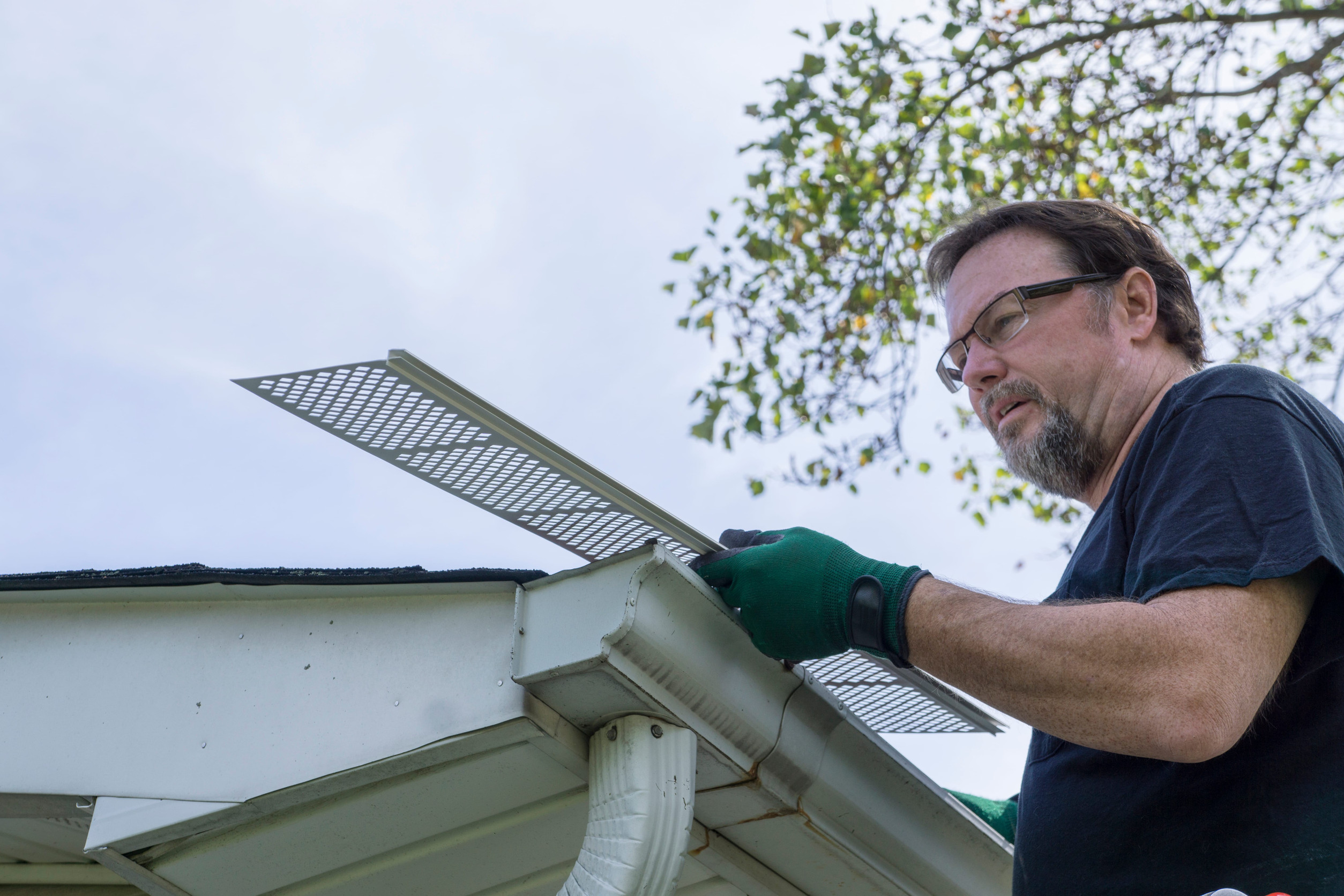
Gutter guards are protective covers or inserts designed to limit the amount of debris entering a gutter system.
Instead of allowing leaves and twigs to fall directly into an open gutter, the guard creates a barrier that separates larger debris from the water moving off the roof.
Rainwater passes through openings or across a specially designed surface into the gutter, while much of the debris remains outside.
The effectiveness depends on the guard’s design, the type of debris, roof conditions, rainfall intensity, and installation quality.
Several designs are available, including:
Each design has advantages and limitations. For example, a screen that blocks large leaves may still allow smaller particles through, while a fine mesh may require occasional surface cleaning.
The best choice depends on the home, surrounding trees, roof design, and existing gutters.
The most obvious advantage of gutter guards is their ability to reduce the amount of leaf debris entering the gutter.
Without protection, falling leaves can settle directly into the channel. Over time, they accumulate and create blockages.
With properly selected leaf protection gutters, many larger leaves are prevented from entering in the first place.
This can be particularly helpful for homes surrounded by deciduous trees that drop large quantities of leaves during a short period.
However, some leaves may remain on top of the guards, especially when wet. Wind, rain, and drying conditions may eventually move them away, but occasional removal may still be necessary.
The benefit is reduced debris accumulation inside the gutter, not a guarantee that the system will always remain completely clear.
Traditional gutter cleaning often involves removing handfuls of wet leaves, dirt, and other debris from narrow channels.
For homeowners with multiple trees, that process may need to be repeated throughout fall.
Gutter guards can reduce the amount of material collecting inside the system, potentially decreasing how often thorough interior cleaning is necessary.
That doesn’t mean homeowners should ignore their gutters after installation.
Regular fall gutter maintenance should still include:
Reducing maintenance is different from eliminating it, but it can still be a meaningful improvement for homeowners dealing with heavy leaf accumulation.
Your gutters have an important job: collecting rainwater from the roof and directing it away from the house.
When debris blocks that pathway, water may overflow or drain unpredictably.
The U.S. Department of Energy’s Building Science Education program explains that effective gutters and downspouts help direct roof runoff away from a home’s foundation, reducing the potential for water-related problems.
By limiting debris accumulation, gutter guards can help keep the drainage pathway more open during fall rainstorms.
This matters because uncontrolled roof runoff can contribute to:
Gutter guards don’t correct improperly pitched gutters, undersized downspouts, or poor drainage around the foundation. Those problems must be addressed separately.
However, reducing debris-related blockages can support the overall performance of a properly designed drainage system.
Fall leaf protection becomes especially relevant when Minnesota temperatures begin dropping.
Wet leaves and debris trapped inside gutters can hold water. When freezing temperatures arrive, that water may turn to ice.
Frozen debris can interfere with drainage and add weight to a gutter system.
By reducing leaf accumulation, gutter guards may help limit some of these debris-related problems.
However, it’s important to understand what gutter guards cannot do.
No. Gutter guards should not be considered an ice-dam prevention system.
The University of Minnesota Extension explains that ice dams develop primarily because of uneven roof temperatures. Heat escaping from a home can melt snow on warmer roof surfaces, while water refreezes along colder roof edges.
The resulting ice can prevent meltwater from draining properly.
Air sealing and appropriate insulation are important components of long-term ice-dam prevention.
Gutter guards may help keep leaves out of gutters, but they cannot correct attic heat loss or prevent all winter ice accumulation.
This distinction matters when evaluating gutter guards in Minnesota, where winter conditions can be demanding.
Gutter guards and seamless gutters perform different but complementary functions.
Seamless gutters are custom-fabricated to fit the home, reducing the number of joints along the main gutter runs compared with traditional sectional systems.
Fewer joints can mean fewer potential leak points.
Gutter guards focus on a different issue: keeping debris from accumulating inside those channels.
Together, the two components can provide a more convenient approach to managing roof runoff.
North Edge Exteriors offers custom-fit seamless gutter installation and gutter guard systems for Minnesota homeowners.
A properly designed system should account for gutter size, downspout placement, roof configuration, drainage requirements, and the types of debris commonly found around the property.
Not every home has the same gutter maintenance needs.
A house surrounded by mature trees may experience significant leaf accumulation every fall. A home with few nearby trees may require less frequent cleaning.
Before deciding on gutter guard installation, consider several factors.
Large deciduous trees can produce substantial leaf buildup, while pine trees contribute needles that may behave differently depending on the guard design.
Roof valleys, steep slopes, and areas where runoff concentrates may influence which guard systems perform best.
Guards work best when the underlying gutters are in good condition and properly installed.
Hard-to-reach gutters may make maintenance more challenging, increasing the appeal of a system designed to reduce debris accumulation.
Gutter guards are not maintenance-free. Homeowners should expect occasional inspections and cleaning even after installation.
The goal is to select a system appropriate for the property rather than assuming one product works equally well for every house.
Before installing gutter guards, the existing gutter system should be evaluated.
Adding covers to gutters that already sag, leak, or drain poorly will not solve those underlying problems.
A useful pre-installation inspection considers:
Installation details also matter. Guards must be secured appropriately without interfering with roofing materials or drainage.
For homeowners considering new gutters, it may be practical to evaluate gutter guards as part of the overall installation rather than treating them as an unrelated addition.
Even with gutter guards, homeowners should inspect their drainage systems throughout the year.
Fall is particularly important because leaves accumulate quickly, but spring storms and winter weather can also affect gutter performance.
A simple maintenance routine includes checking the system after major storms, looking for debris accumulation, and confirming that water exits through the downspouts.
Watch for water spilling over the gutter during rain. Overflow may indicate debris on the guard surface, a blocked downspout, excessive runoff, or another drainage problem.
Also inspect the ground around the foundation.
Water should be directed away from the home rather than consistently collecting beside it.
If an inspection requires climbing onto a roof or working from a difficult ladder position, professional assistance is the safer choice.
Fall is a natural time to think about gutter protection because debris problems become especially visible.
However, gutter guards can be considered whenever a homeowner is evaluating gutter maintenance or replacement.
They may be particularly useful when:
The decision should reflect the home’s actual drainage needs.
Minnesota’s colorful fall season is one of the best times of year, but falling leaves create real maintenance challenges for homeowners.
Gutter guards can help by reducing leaf accumulation, limiting certain debris-related clogs, and making seasonal maintenance more manageable.
They can also support proper drainage when paired with correctly installed gutters and downspouts.
However, no gutter guard eliminates every maintenance task or guarantees protection against ice dams.
The most effective approach combines appropriate gutter protection with periodic inspections, clear downspouts, and proper water drainage away from the home.
For homeowners comparing gutter guards in Minnesota, understanding both the benefits and limitations makes it easier to choose a system that fits the property.
A little preparation during fall can help keep the gutter system functioning as intended through autumn rain, winter weather, and the spring thaw.
North Edge Exteriors is a locally owned exterior contractor based in Cambridge, Minnesota. The company provides custom-fit seamless gutters and gutter guard systems, along with roofing, siding, and window services.
Homeowners evaluating gutter protection, drainage concerns, or exterior maintenance can use professional installation and inspection information to understand which options may be appropriate for their property.
North Edge Exteriors
1650 32nd Ave SW
Cambridge, MN 55008
Phone: 320-515-9134