
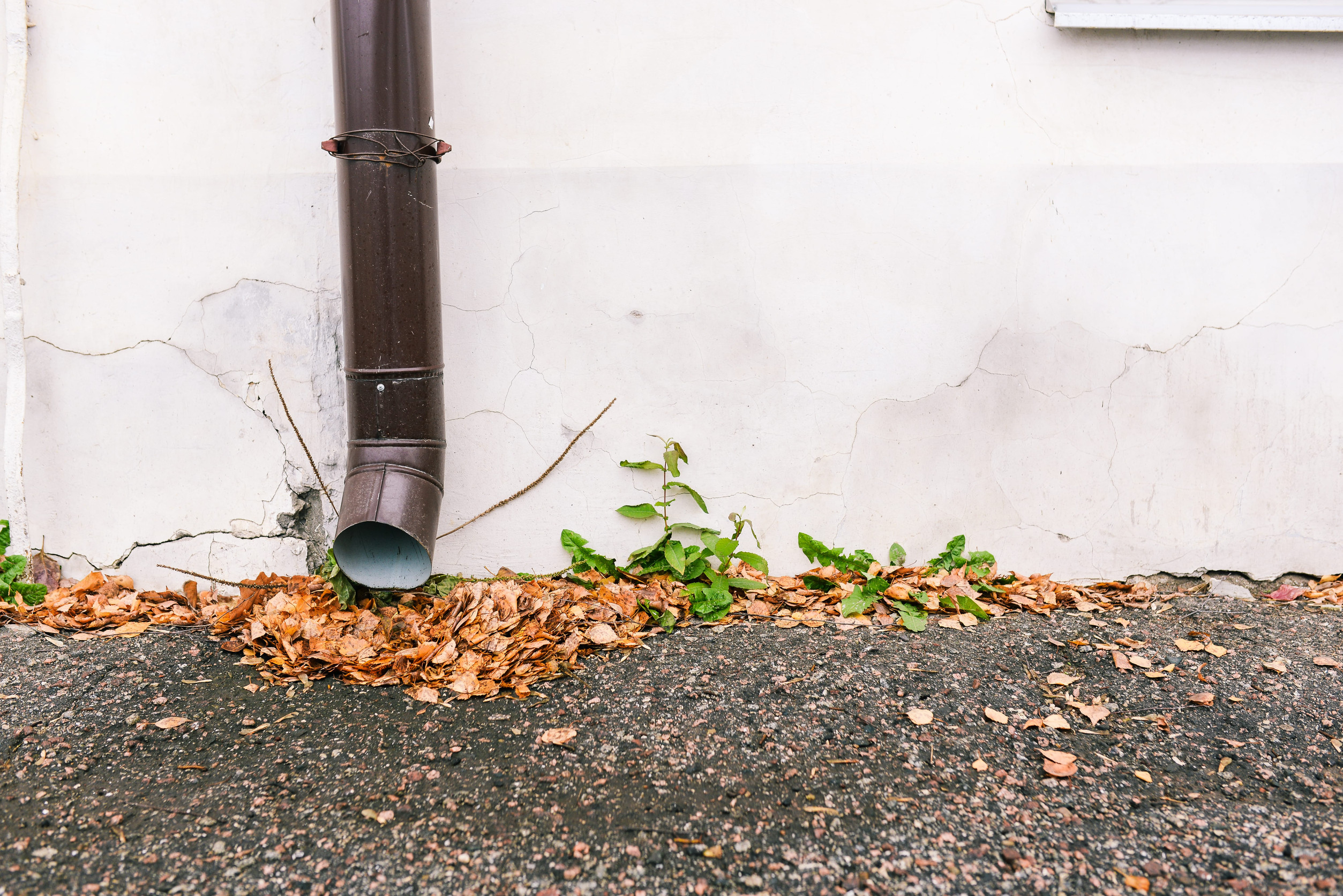
Fall in Minnesota brings colorful trees, cooler temperatures, and an important reminder for homeowners: those leaves eventually have to go somewhere.
Unfortunately, many of them end up in your gutters.
Leaves, pine needles, twigs, seed pods, and other debris can quickly collect inside a gutter system. Add fall rain and eventually freezing temperatures, and a relatively simple clog can turn into a much bigger headache.
That is why fall gutter maintenance is an important part of preparing a Minnesota home for winter.
Your gutters perform a simple but essential job. They collect water running off the roof and direct it through downspouts and away from the house. When that system becomes clogged, loose, damaged, or improperly drained, water may end up where you do not want it.
A little attention before winter can help keep gutters functioning properly through late-fall rain, melting snow, and eventually the spring thaw.
Here is what Minnesota homeowners should know.
Gutters are easy to forget when they are working correctly.
During a rainstorm, water runs off the roof, enters the gutters, moves through the downspouts, and drains away from the house. You may barely notice it happening.
Problems become much more obvious when something interrupts that process.
Clogged gutters can cause water to overflow instead of moving toward the downspouts. Water may spill over the front, run behind the gutter, collect near the roofline, or fall directly beside the foundation.
The U.S. Department of Energy’s Building Science Education resources emphasize the importance of gutters and downspouts for managing roof runoff and directing water away from a home’s foundation.
In Minnesota, there is another consideration: freezing temperatures.
Water trapped in a clogged or poorly draining gutter can freeze, adding weight to the system and making existing problems more noticeable.
Fall maintenance is your opportunity to address those concerns before winter settles in.
The first step in gutter cleaning in Minnesota is straightforward: remove accumulated debris.
Leaves are the most obvious culprit, but gutters can collect much more than leaves.
You may find:
When this material becomes wet, it can form a dense layer that restricts water flow.
Homes surrounded by mature trees may need gutter cleaning more than once during fall. Cleaning too early can mean the gutters are full again by the time the final leaves drop.
Consider checking the gutters periodically throughout the season rather than assuming one cleaning is always enough.
Cleaning gutters often involves working from a ladder, and falls can cause serious injuries.
Use appropriate ladder safety practices and avoid attempting gutter work when surfaces are wet, icy, unstable, or difficult to reach.
Multi-story homes, steep roof lines, uneven ground, and hard-to-access gutters may be better handled professionally.
The goal of home maintenance is to protect the house—not put yourself at unnecessary risk.
Clean gutters will not accomplish much if the downspouts are blocked.
Downspouts carry water from the gutters toward ground level, where it can be directed away from the structure. Leaves and other debris can become lodged inside, particularly near elbows and connections.
Signs of a clogged downspout can include:
After cleaning the gutters, check that water can move freely through each downspout.
This is one of the most important steps when you prepare gutters for winter because trapped water can freeze when temperatures drop.
Once the debris is gone, take a step back and inspect the gutter system itself.
Gutters should remain securely attached and positioned to move water toward the downspouts.
Look for sections that appear to sag, bow, separate, or pull away from the fascia.
Potential warning signs include:
A sagging section can create a low spot where water collects instead of draining properly.
Once freezing temperatures arrive, that standing water can turn to ice and add even more weight.
Catching loose or sagging gutters during fall gutter maintenance gives homeowners an opportunity to address the underlying issue before snow and ice add additional stress.
Not every gutter problem involves a major clog.
Small leaks can develop around joints, corners, end caps, fasteners, or damaged areas.
You may notice water dripping from a location where it should not, staining on the fascia, erosion below a gutter section, or water marks on siding.
A dry fall day can be useful for a visual inspection, while a rainstorm can reveal how the system actually performs.
Pay attention to where water goes.
If it is consistently escaping from one section instead of traveling toward the downspout, investigate why.
North Edge Exteriors installs custom-fit seamless gutters, which reduce the number of joints along the main gutter runs compared with traditional sectional systems. Fewer seams can mean fewer potential locations for leaks, although any gutter system still benefits from routine inspection and maintenance.
Getting water out of the gutter is only part of the job.
You also need to consider where it goes next.
Downspouts should discharge water in a way that keeps roof runoff from concentrating next to the foundation.
The U.S. Department of Energy’s Building Science Education program explains that large amounts of roof runoff can saturate soil around a building if water is not properly directed away. Good water-management practices help reduce the risk of foundation moisture problems.
During your Minnesota gutter maintenance, inspect the area around every downspout.
Watch for:
Remember that fall conditions are not the only concern.
Snow eventually melts. Your gutter and drainage system also needs to manage that water when temperatures begin warming again.
The fascia board runs along the roof edge and commonly provides the surface where gutters are attached.
Because the two components are so closely connected, gutter problems may sometimes leave clues on the fascia.
Look for:
Water repeatedly spilling behind or around a gutter can affect nearby exterior materials.
Do not assume that visible fascia damage automatically means the gutter caused the problem. Roofing, flashing, and other exterior conditions can also contribute to moisture near the roof edge.
However, visible deterioration is worth investigating before winter.
Sometimes gutters look perfectly clean but still do not drain correctly.
The system needs an appropriate slope toward the downspouts. If a section is incorrectly pitched or has shifted over time, water may remain inside after a rainstorm.
Standing water is especially undesirable heading into a Minnesota winter.
After rain, look for sections that retain water long after the rest of the system has drained.
Persistent standing water may indicate:
Correcting the cause helps the gutter perform the way it was intended.
A gutter full of leaves in October may become a gutter full of frozen debris later in the season.
That is where routine fall maintenance becomes particularly important.
When water cannot drain freely, it may remain in the gutter and freeze as temperatures fall. Repeated freezing and thawing can place stress on gutter components, particularly when a system already has loose fasteners, sagging areas, or damage.
It is also important to distinguish gutter ice from roof ice dams.
According to the University of Minnesota Extension, ice dams develop when heat loss from the home contributes to uneven roof-surface temperatures. Snow melts on warmer portions of the roof and refreezes near colder roof edges. Water can then back up behind the ice.
Cleaning your gutters is good maintenance, but clean gutters alone do not prevent an ice dam caused by heat loss through the home’s ceiling and attic.
If your home repeatedly develops significant ice dams, the underlying insulation and air-leakage conditions may need evaluation.
For homeowners surrounded by trees, keeping gutters clear can become a repetitive fall chore.
Gutter guards in Minnesota are designed to reduce the amount of leaves and larger debris entering the gutter while allowing water to reach the drainage system.
North Edge Exteriors offers gutter guard systems as part of its gutter services.
Gutter guards can reduce maintenance needs, but they should not be treated as a reason to ignore gutters indefinitely.
Debris may still accumulate on top of a guard or in certain areas, and the overall system should still be periodically inspected for drainage, damage, and proper attachment.
Think of gutter guards as a maintenance-reduction tool rather than a completely maintenance-free solution.
Cleaning cannot fix every gutter problem.
Older or damaged gutters may reach a point where repeated repairs are no longer the most practical approach.
Replacement may be worth evaluating if you notice:
North Edge Exteriors provides custom-fit seamless gutter installation for Minnesota homeowners.
Seamless gutters are fabricated to fit the home’s dimensions, reducing the number of joints along long gutter runs. They still require appropriate installation, downspout placement, and routine inspection, but fewer seams can reduce common potential leak points.
Good fall gutter maintenance does not need to become complicated.
For many homeowners, a simple seasonal routine is enough:
Early Fall: Visually inspect gutters, downspouts, and attachments for obvious damage.
During Leaf Drop: Watch for overflowing gutters and clear heavy accumulations when necessary.
After Most Leaves Have Fallen: Complete a thorough final cleaning and make sure downspouts are clear.
Before Sustained Freezing Weather: Check drainage, attachments, fascia, and downspout discharge areas one final time.
Homes surrounded by pine trees or heavy tree cover may require additional checks.
The right schedule depends on your property.
Gutters are not the most noticeable feature of a home’s exterior, but they perform an important job every time it rains or snow begins to melt.
A good fall gutter maintenance routine helps keep that drainage system working as intended.
Remove leaves and debris. Check the downspouts. Look for sagging, leaks, and loose attachments. Make sure water is being directed away from the foundation. Pay attention to fascia damage and areas where water consistently collects.
Most importantly, do not wait until gutters are packed with frozen leaves to discover there is a problem.
Regular gutter cleaning in Minnesota and seasonal inspections give homeowners a better understanding of their gutter system’s condition before snow, ice, and freezing temperatures arrive.
Whether your home has traditional gutters, seamless gutters, or gutter guards in Minnesota, fall is an ideal time to make sure the entire drainage system is ready for the season ahead.
North Edge Exteriors provides exterior home services throughout Minnesota and is based in Cambridge. The company’s services include custom-fit seamless gutter installation and gutter guard systems, along with roofing, siding, and window services.
Homeowners evaluating gutter condition, drainage concerns, or exterior maintenance can use professional inspection and service information to better understand the condition of their home’s exterior.
North Edge Exteriors
1650 32nd Ave SW
Cambridge, MN 55008
Phone: 320-515-9134
Email: info@NorthEdgeExteriors.com