
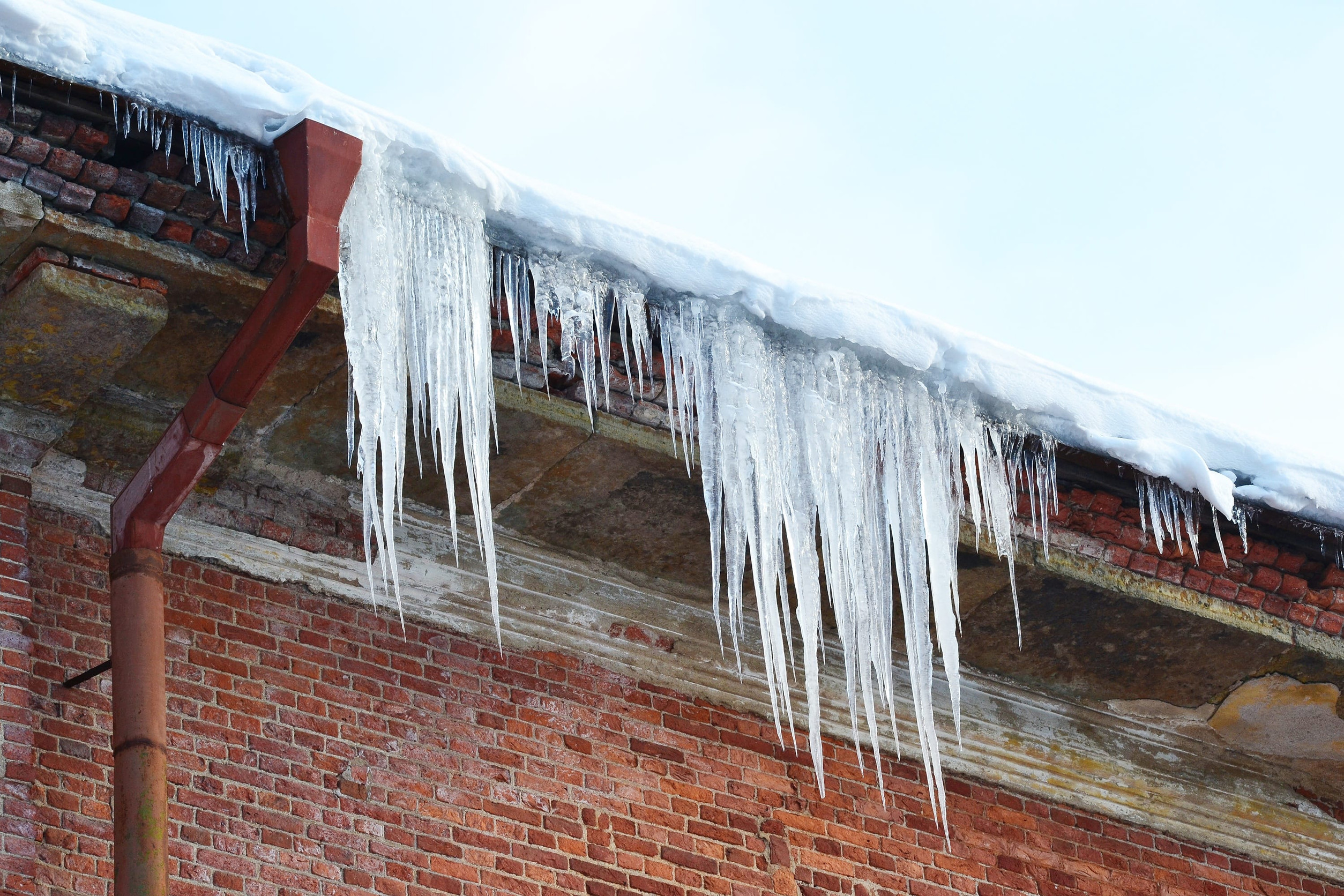
Minnesota homeowners know that snow and ice are part of winter.
Additionally, snow-covered rooftops, frozen lakes, and icicles hanging from the eaves are familiar sights.
However, not every winter roofing condition is harmless, including ice dams in minnesota.
One of the most common concerns is the formation of ice dams.
Ice dams in Minnesota can create significant problems for homeowners, particularly when melting snow becomes trapped along the roof’s edge. What begins as a ridge of ice can eventually lead to water entering the home, damaging insulation, ceilings, walls, and other materials.
Unfortunately, ice dams in minnesota often return year after year when underlying conditions remain unchanged.
Understanding why they form, how to recognize the warning signs, and which prevention methods actually work can help homeowners protect their roofs throughout Minnesota’s demanding winters.
An ice dam is a ridge of ice that develops along the lower edge of a roof, usually near the eaves.
It forms when snow melts on a warmer section of the roof and flows toward a colder area, where the water refreezes.
As additional snow melts, more water reaches the frozen ridge. The ice gradually builds up, creating a barrier that prevents water from draining normally.
Eventually, liquid water may collect behind the ice dam.
Because asphalt shingles are designed to shed water flowing down a roof rather than resist standing water, trapped meltwater can sometimes work beneath roofing materials and enter the structure.
This is why ice dams are more than a cosmetic winter concern.
Although freezing temperatures contribute to ice dam formation, cold weather alone isn’t the underlying cause.
The University of Minnesota Extension explains that ice dams develop when different portions of a roof have different surface temperatures.
Typically, the upper roof becomes warm enough to melt snow while the lower edge remains below freezing.
Several factors can contribute to this temperature difference.
Warm indoor air can escape through openings in the ceiling and enter an unconditioned attic.
Common leakage points include attic access panels, recessed lighting, plumbing penetrations, and other openings.
This escaping heat can warm the roof deck and melt snow above it.
Insulation helps slow heat transfer between heated living spaces and the attic.
When insulation is insufficient or unevenly distributed, more heat may reach the roof.
Properly designed roof ventilation can help manage attic temperatures and moisture.
However, ventilation alone cannot compensate for significant air leakage or inadequate insulation.
Snow provides the moisture needed for ice dams to develop.
When melting snow reaches a colder roof edge, it refreezes and gradually forms the obstruction.
The combination of snow cover, heat loss, and freezing temperatures creates the conditions associated with many Minnesota winter roofing problems.
Ice dams aren’t always immediately obvious.
Some form beneath snow accumulation, while others create visible ridges along the roofline.
Homeowners should watch for several warning signs.
Not every icicle indicates an ice dam, but unusually large or recurring formations deserve attention.
Interior moisture is particularly concerning because it may indicate that water has already entered the building.
The most significant concern with ice dams is water intrusion.
When meltwater becomes trapped behind a ridge of ice, it may find openings beneath shingles, around flashing, or within vulnerable roofing details.
Once water enters the roof assembly, damage can extend beyond the visible roofing materials.
Repeated moisture exposure can affect roofing components, particularly when existing defects allow water to reach underlying materials.
Water entering the attic can saturate insulation, potentially reducing its effectiveness and creating additional moisture concerns.
Leaks may produce stains, peeling paint, damaged drywall, or deteriorating interior finishes.
Materials that remain wet can develop mold or other moisture-related deterioration.
Heavy ice accumulation can place additional stress on gutters and exterior components.
These potential consequences make early identification and appropriate roof ice dam prevention important for Minnesota homeowners.
Long-term ice dam prevention focuses primarily on controlling heat loss and maintaining appropriate roof conditions.
The most effective approach usually involves several improvements working together.
Additionally, air sealing is one of the most important steps homeowners can take to prevent ice dams in minnesota.
Warm indoor air can move through relatively small ceiling openings and carry heat into the attic.
Sealing these leakage points helps reduce unwanted heat transfer.
A professional energy assessment may identify areas that require attention, particularly in older homes.
Adequate insulation helps maintain a more consistent temperature between the living space and attic.
However, simply adding insulation without addressing air leaks may leave the underlying problem unresolved.
Air sealing and insulation should be evaluated together.
Proper ventilation can help maintain appropriate conditions within a vented attic.
Blocked soffit vents, inadequate airflow pathways, or improperly configured ventilation may affect performance.
Ventilation should be designed for the specific roof assembly rather than increased indiscriminately.
Damaged shingles, deteriorated flashing, and other roofing defects may increase the risk of water intrusion when ice dams develop.
A roof inspection can identify visible concerns before winter weather makes repairs more difficult.
Cleaning gutters helps maintain normal roof drainage and reduces debris-related blockages.
However, clean gutters alone cannot prevent ice dams caused by uneven roof temperatures.
Gutter maintenance should be considered one part of overall winter preparation.
Roof ventilation plays a supporting role in many attic systems, but it isn’t a guaranteed solution.
In a properly designed vented attic, ventilation helps manage moisture and remove some accumulated heat.
However, the University of Minnesota Extension emphasizes that reducing heat loss from the home is the primary long-term strategy for preventing ice dams.
Adding ventilation without addressing ceiling air leakage may provide limited improvement.
Mechanical attic ventilation is also not generally recommended as an ice-dam solution because it can create unwanted pressure differences and moisture concerns.
Homeowners experiencing recurring ice dams should consider a comprehensive attic evaluation rather than assuming additional roof vents will solve the problem.
Gutter guards are designed to reduce debris accumulation inside gutters.
They can help limit clogs caused by leaves, twigs, and other materials.
However, gutter guards do not correct the temperature differences responsible for most ice dams.
Ice may still accumulate along roof edges even when gutters are completely clear.
For homeowners considering gutter protection, it’s important to distinguish between improving drainage and preventing ice dam formation.
Both are worthwhile maintenance considerations, but they address different problems.
Discovering a large ice dam can be concerning, especially if water is entering the home.
However, attempting to remove it without proper equipment can create additional risks.
Avoid climbing onto an icy roof, striking ice with sharp tools, or attempting to chip away frozen material.
These methods can damage shingles and expose homeowners to serious falls.
If an ice dam is causing an active leak, professional assistance is the safest approach.
Qualified professionals may use appropriate snow-removal or ice-removal methods to address the immediate problem.
Inside the home, protect belongings from water exposure and document visible damage.
Wet materials should be dried promptly to reduce the risk of additional moisture problems.
Once the immediate situation is controlled, the underlying cause should be investigated.
Removing the ice without correcting excessive heat loss may allow the problem to return.
A new roofing system can improve protection against water intrusion, particularly when existing materials are deteriorated.
However, replacing shingles alone does not necessarily prevent ice dams.
The underlying causes may involve attic air leakage, insulation, ventilation, or roof design.
During a roof replacement, contractors can evaluate protective components such as ice-and-water barriers and flashing.
Ice-and-water protection is a self-adhering membrane installed beneath roofing materials in vulnerable areas.
It provides an additional layer of protection against water intrusion associated with ice dams and other conditions.
The U.S. Department of Energy’s Building Science Education program identifies protective membranes at roof eaves as an important measure for cold-climate roofing systems.
However, this membrane helps protect against water intrusion; it does not eliminate the temperature differences that cause ice dams.
A complete approach considers both the roof’s weather protection and the home’s heat-loss conditions.
A professional roof inspection may be appropriate when homeowners notice recurring ice dams, interior water stains, damaged shingles, or other winter roofing concerns.
An inspection can help identify visible roof defects and determine whether repairs are needed.
For recurring ice dams, an attic energy assessment may also be necessary to evaluate air sealing, insulation, and ventilation.
North Edge Exteriors provides roofing inspections, repairs, and replacement services for Minnesota homeowners.
As a 4 Star CertainTeed Certified Contractor, the company installs CertainTeed asphalt shingles and offers roofing solutions designed for Minnesota’s seasonal conditions.
Older homes may have conditions that increase ice dam risk, particularly if attic insulation or air sealing has not been updated.
However, newer homes can also develop ice dams.
Complex roof designs, attic penetrations, uneven insulation, and other construction details can contribute to temperature differences.
A home’s age alone does not determine whether ice dams will form.
The more important considerations are how effectively the building controls heat loss and how the roof assembly manages winter conditions.
Ice dams are a familiar winter concern, but they shouldn’t be dismissed as an unavoidable part of living in Minnesota.
Understanding how they form is the first step toward reducing the risk.
For many homes, long-term prevention begins with controlling heat loss through attic air sealing and insulation. Appropriate ventilation and well-maintained roofing components provide additional support.
Gutters, protective membranes, and roofing repairs can help manage water and protect vulnerable areas, but they do not replace the need to address underlying temperature differences.
Homeowners dealing with recurring ice dams in Minnesota benefit from evaluating the entire roof and attic system rather than focusing only on the visible ice.
With appropriate maintenance and informed improvements, Minnesota homeowners can better protect their properties from one of winter’s most troublesome roofing problems.
North Edge Exteriors is a locally owned exterior contractor based in Cambridge, Minnesota, providing roofing, siding, window, seamless gutter, and gutter guard services.
The company offers roof inspections, maintenance, repairs, and CertainTeed asphalt shingle installation.
Homeowners researching ice dam damage, roof maintenance, or replacement options can use professional roofing evaluations to better understand the condition of their exterior systems.
North Edge Exteriors
1650 32nd Ave SW
Cambridge, MN 55008
Phone: 320-515-9134
Email: info@NorthEdgeExteriors.com