
When winter arrives in Minnesota, most homeowners focus on keeping cold air outside and warm air inside. After all, when temperatures drop below zero, the last thing anyone wants is heat escaping through the roof.
So why would your attic need ventilation during winter?
It might seem counterintuitive, but proper roof ventilation in Minnesota plays an important role in protecting your home from moisture problems, condensation, and certain types of winter roof damage.
Your roof and attic are part of a larger system that includes insulation, air sealing, and moisture management. When these components work together, they help maintain a durable roof assembly throughout Minnesota’s changing seasons.
However, improper ventilation or blocked airflow can contribute to problems that aren’t always visible from outside.
Understanding how winter roof ventilation works, why it matters, and which warning signs deserve attention can help homeowners make informed decisions about roof maintenance and repairs.
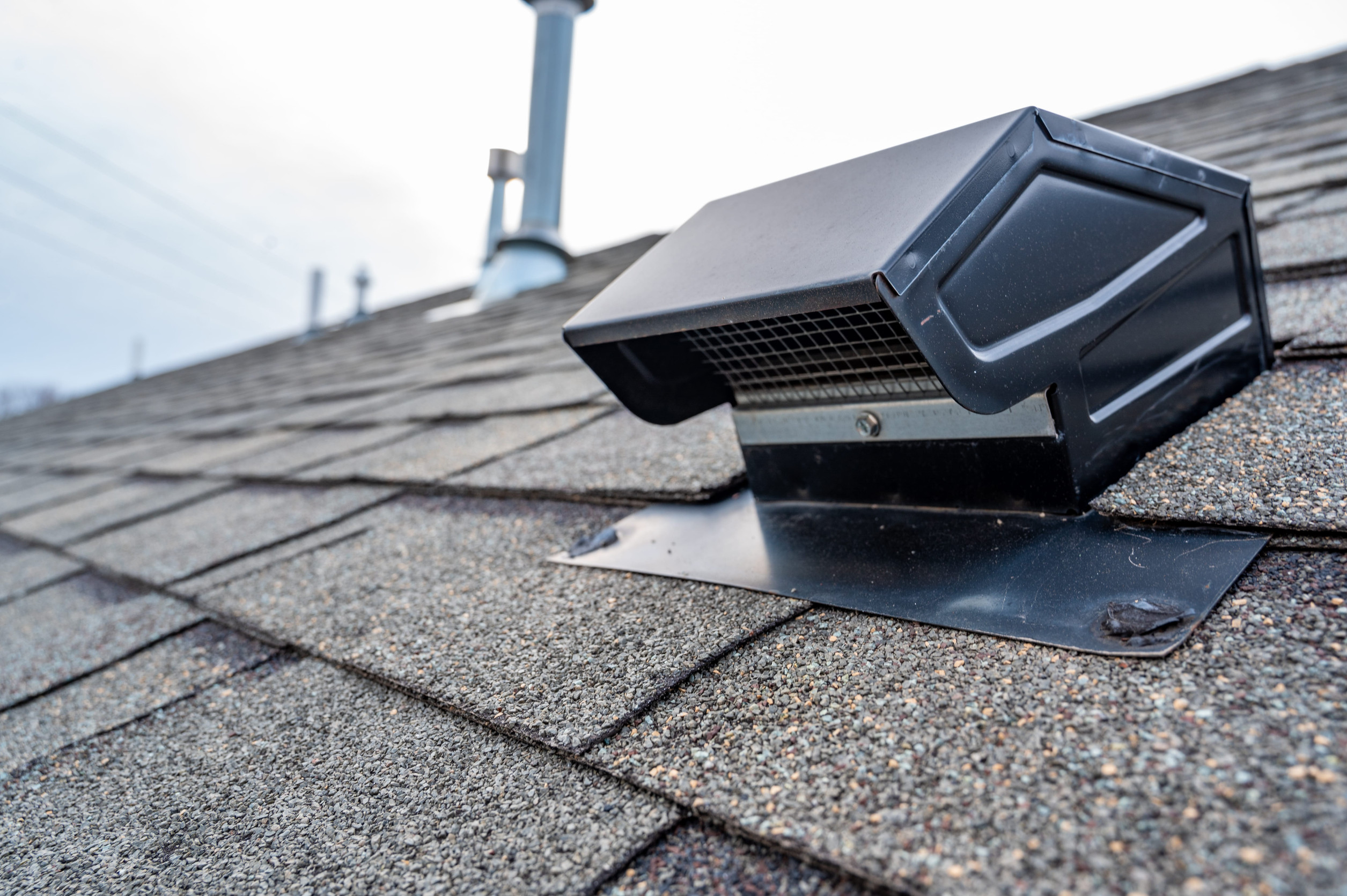
Roof ventilation refers to the movement of outdoor air through a properly designed, vented attic or roof assembly.
In many traditional Minnesota homes, the attic is an unconditioned space located between the heated living area and the roof.
A typical ventilation system uses openings near the lower roof edges and additional openings near the roof’s upper portions.
This arrangement allows outdoor air to enter through lower vents and exit through upper vents.
The goal is to help manage moisture and temperature conditions within the attic.
Several ventilation components may be used, including:
Not every home requires the same arrangement.
Roof design, attic construction, insulation placement, and building requirements determine which approach is appropriate.
Some homes also use intentionally unvented roof assemblies. These systems rely on different insulation and moisture-control strategies and should not be treated like conventional vented attics.
Minnesota’s winter conditions create challenges for roofs and attics.
Indoor heating, outdoor freezing temperatures, snowfall, and changing humidity levels can produce significant temperature and moisture differences between living spaces and attic areas.
In a conventional vented attic, appropriate ventilation helps manage these conditions.
However, ventilation works best when the ceiling separating the attic from the living space is properly air-sealed and insulated.
Without those measures, warm, moist indoor air may continually enter the attic, overwhelming the benefits of ventilation.
Three important considerations are moisture control, roof temperature, and long-term material durability.
Moisture is one of the biggest concerns in Minnesota attics during winter.
Everyday household activities generate water vapor.
Cooking, showering, laundry, and normal occupancy all contribute moisture to indoor air.
When warm, moist air escapes through openings in the ceiling, it may enter a much colder attic.
If that moisture reaches a sufficiently cold surface, condensation can form.
Condensation may collect on roof sheathing, framing, or other attic surfaces.
If materials remain damp, moisture can contribute to:
In severe conditions, moisture may even freeze on attic surfaces and appear as frost.
When temperatures rise, accumulated frost can melt and create water stains or dripping.
Proper attic ventilation helps remove some moisture from a vented attic, but controlling the source is equally important.
Air sealing and correctly venting bathroom and kitchen exhaust fans outdoors are essential parts of moisture management.
Ice dams are a familiar winter roofing concern throughout Minnesota.
They develop when snow melts on a warmer section of a roof and refreezes near a colder roof edge.
Over time, ice can create a barrier that prevents additional meltwater from draining normally.
Water trapped behind that barrier may work beneath roofing materials and enter the home.
In a conventional vented attic, natural airflow can help maintain more consistent roof temperatures.
However, ventilation is not the primary solution for most ice-dam problems.
The University of Minnesota Extension emphasizes that reducing heat loss from the living space is the most important long-term prevention strategy.
Warm air escaping through attic openings and insufficient insulation can contribute to uneven roof temperatures.
That means effective ice dam prevention generally begins with:
Adding more roof vents without correcting heat loss may accomplish very little.
Mechanical attic fans are not generally recommended as an ice-dam solution because they can create pressure differences and additional moisture concerns.
Your roofing system includes more than the shingles visible from the street.
Roof decking, underlayment, flashing, insulation, and framing all contribute to the structure’s performance.
When moisture accumulates inside an attic, it can affect these materials over time.
Persistent dampness may lead to deterioration of wood sheathing or framing, potentially creating more extensive repair needs.
Appropriate winter roof ventilation helps manage moisture in conventional vented roof assemblies.
However, ventilation cannot repair an existing roof leak or compensate for damaged flashing.
If water is entering through the roofing materials, the source must be identified and corrected.
This is why a comprehensive roof evaluation should consider both the exterior roofing materials and the conditions beneath them.
Homeowners sometimes assume that more ventilation means more heat escaping from the house.
In a properly designed vented attic, that shouldn’t be the case.
The insulation and air barrier at the ceiling help separate heated living spaces from the unconditioned attic.
Ventilation occurs above that boundary.
Insulation slows heat transfer, while air sealing reduces the movement of warm indoor air into the attic.
Both are necessary for effective performance.
If the ceiling contains significant air leaks, warm air can escape regardless of how much insulation is present.
The U.S. Department of Energy recommends evaluating air sealing, insulation, and ventilation together when improving attic performance.
For Minnesota homeowners, this approach can help reduce unwanted heat loss while supporting a healthier attic environment.
Even a properly designed ventilation system may not function as intended if airflow pathways become blocked.
One common issue occurs near the roof’s lower edges.
Insulation may be pushed against soffit openings, restricting intake airflow.
Stored materials, construction changes, or deteriorated components can also interfere with ventilation.
Attic baffles are components installed near roof eaves to help maintain a clear ventilation pathway.
They allow air to move from soffit vents toward the attic while helping prevent insulation from blocking the opening.
Properly installed baffles can be especially important where roof framing leaves limited space near exterior walls.
However, homeowners should not move insulation or modify attic components without understanding the existing assembly.
An inspection can help determine whether airflow restrictions are present.
Not every winter roof issue is caused by inadequate ventilation.
Still, certain conditions may indicate that the attic’s moisture or temperature management needs attention.
Common warning signs include:
These symptoms can have several possible causes.
For example, ceiling stains might result from condensation, roof leaks, plumbing issues, or ice-dam-related water intrusion.
A professional evaluation helps identify the source rather than assuming ventilation is responsible.
One of the biggest misconceptions about Minnesota roofing is that adding more vents automatically improves roof performance.
In reality, ventilation must be properly designed.
An effective system considers the location and amount of intake and exhaust ventilation, along with the roof’s construction.
Adding vents without evaluating the existing arrangement can create imbalances or unintended airflow patterns.
Likewise, powered attic fans can sometimes draw conditioned air from the living space if the ceiling is not adequately sealed.
This may increase energy loss or introduce additional moisture into the attic.
The correct approach is to evaluate the entire roof assembly before making changes.
Homeowners can recognize certain warning signs without climbing onto the roof.
Start by observing the home’s exterior and checking for visible damage around soffits, roof vents, and other accessible components.
Inside the home, watch for recurring ceiling stains, moisture concerns, or unusual winter drafts.
If the attic is safely accessible, visible frost or damp materials may indicate a problem.
However, avoid entering unsafe attic spaces or disturbing electrical wiring, insulation, or ventilation components.
A professional inspection may include evaluating:
When recurring ice dams or condensation are involved, a home energy professional may also evaluate air leakage using specialized testing.
Roof replacement provides an opportunity to evaluate the existing roofing system.
During the project, a contractor may identify damaged decking, deteriorated vents, or other visible concerns.
However, installing new shingles does not automatically correct attic ventilation or insulation problems.
The appropriate scope depends on the roof’s design and existing conditions.
North Edge Exteriors provides roofing inspections, repairs, and CertainTeed asphalt shingle installation for Minnesota homeowners.
As a 4 Star CertainTeed Certified Contractor, the company offers roofing services that can help homeowners evaluate the condition of their exterior roofing components.
If an inspection identifies attic insulation or air-sealing concerns, additional evaluation by an appropriate home energy or insulation professional may be necessary.
Roof ventilation can be evaluated during routine roofing inspections, before a roof replacement, or whenever homeowners notice recurring moisture concerns.
Fall is a practical time to identify visible problems before snow and ice make access more difficult.
However, winter inspections may also reveal condensation or frost conditions that aren’t present during warmer months.
The important consideration is recognizing symptoms and identifying their causes.
A roof that looks fine from outside may still have moisture concerns beneath the surface.
Minnesota winters place significant demands on residential roofs.
Snow, freezing temperatures, indoor heating, and moisture can all influence how roofing systems perform.
Proper roof ventilation in Minnesota helps manage moisture and supports more consistent conditions within conventional vented attics.
However, ventilation is only one part of the solution.
Effective air sealing, appropriate insulation, sound roofing materials, and proper moisture management must work together.
For homeowners experiencing recurring ice dams, attic frost, or unexplained ceiling stains, understanding these relationships is essential.
A well-maintained roof assembly is not simply about having enough vents. It’s about ensuring that every component performs its intended function.
North Edge Exteriors is a locally owned exterior contractor based in Cambridge, Minnesota, offering roofing, siding, window, seamless gutter, and gutter guard services.
The company provides roof inspections, maintenance, repairs, and CertainTeed asphalt shingle installation.
Homeowners researching winter roof concerns, roofing repairs, or replacement options can use professional evaluations to better understand the condition of their roofing systems and determine whether additional attic assessments may be appropriate.
North Edge Exteriors
1650 32nd Ave SW
Cambridge, MN 55008
Phone: 320-515-9134
Email: info@NorthEdgeExteriors.com